

Pinewood stairway and railing systems are valued for their affordability, warm aesthetic, and versatility, fitting well into rustic or traditional home designs. As a softwood, it is also very easy to work with, making it a popular choice for DIY projects.
Rather than installing run-of-the-mill standard styles of stairways and railing systems, why not use unique or custom-made ones? They are available, expertly crafted at fair prices you won’t believe. These systems create an aesthetic that mimics log homes or cabins built in a natural, cozy, and beautiful setting. Let’s check them out.
Why Use Pine Stairway And Railing Systems
If you are looking for staircase and railing systems that are natural-looking, beautiful, and affordable, consider installing red northern pine products. This sustainable wood product has been used for decades in many home styles. Here are the key benefits:
- Cost-Effective: Pine is generally more budget-friendly than many hardwood alternatives, such as oak or maple, offering significant value.
- Aesthetic Appeal: It provides a natural, inviting, and warm look with a distinct grain and knots that many homeowners find charming, especially in farmhouse or cabin styles.
- Easy to Work With: Pine’s softness makes it easy to cut, sand, and drill, simplifying the installation process for both professionals and DIY enthusiasts.
- Customizable: Pine accepts stains and clear top coats very well, allowing for a wide range of color finishes to match various interior designs.
- Durability: While naturally softer than hardwoods, red northern pine is dense enough, and with a high-quality finish, pine stairs and railings can be durable and last for years. For exterior use, pine covered with exterior stains and finishes is highly effective against rot and decay.
Types Of Pine Stairs And Railings
 For the best results for a new or existing home or cabin, consider unique or custom stairs and railings to meet your preferences and décor patterns. Knotty pine stairs and railings can be hand-crafted by experienced craftsmen at prices you can afford. They can be made to order to fit your specifications and dimensions.
Custom pine log stair systems can be built complete with full log stringers and half log treads. In most cases, you can provide the floor-to-floor measurement, and the craftsmen will provide the cost for the style of rustic stairs you choose. (Learn more about how stairs are made form this useful article). Choose from among these favorite pine styles:
- Knotty Pine Molded Railings: Molded railings have a 2×3 smooth pine top and bottom. The balusters are 2×2 in size with a smooth surface, and the posts are 4×4 in size with a smooth surface.
- Knotty Pine Rustic Stair Railings: Rustic railings are available with a hewn or smooth top and bottom rail in a 4×4 size. Balusters are 2×3 in smooth or hewn, and the posts are normally 6×6 in hewn or smooth.
- Timber Style Stairs: Timber stairs typically have a 4×12 stringer, either notched or notched out for treads. Treads are made to the desired thickness and length, dependent on the run and rise. They come in both hewn and smooth on the face.
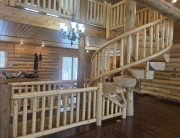
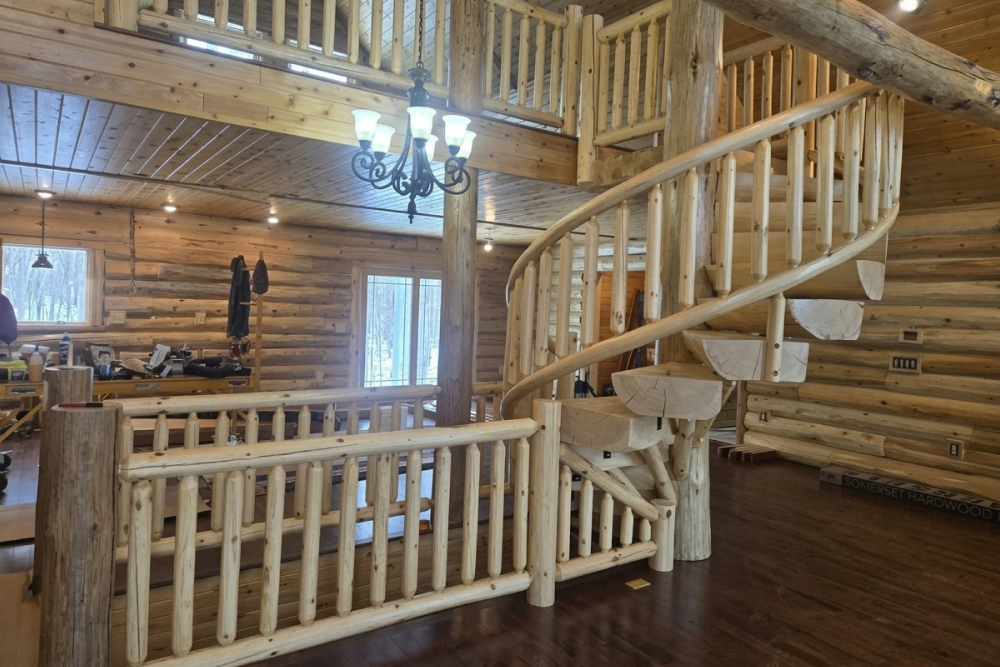
- Natural Log Stairs: Natural stairs are made with half log stair treads notched out to go over the full log stringers (pictured here). They are available in both knotty pine and cedar.
- Pine & Cedar Log Railings: Log railings are hewn logs, top and bottom, in 3.5”- 4” size. 2.75”- 3” balusters are typical but can be adjusted to the railing size desired. Their posts are a standard 5.5” diameter but can be adjusted as desired.
“Pinewood staircase and railing systems are valued for their affordability, warm aesthetic, and versatility, fitting well into rustic or traditional home designs.”
Considerations For Your Project
Building staircases and railings requires focusing on Safety, Building Codes, and Functionality, considering measurements (rise, run, width, angle), material, durability, style, consistent handrail height (usually 34-38″), proper baluster spacing (to prevent falls), and non-slip treads. All components must be compliant with local codes for a safe, usable, and aesthetically pleasing structure. Your staircase and railing system is built with the following components in mind:
Measurements & Dimensions: Precisely measure rise (height of each step) and run (depth of each step) for consistent, comfortable steps, aiming for a comfortable angle (not too steep) and adequate tread depth. Space & Headroom: Ensure sufficient space and at least 6.6 feet of headroom above each tread. Landings: Plan for landings if stairs are long, providing safe rest spots and transitions. Materials: Choose durable materials that fit your budget, style, and require manageable maintenance. Safety Features: Incorporate non-slip treads, and consider emergency lighting. Securing non-slip materials in the middle of the steps will reduce wear.
Building Codes (Crucial): Always check local codes for required handrail height (typically 34-38 inches from tread nosing) and guardrail height. Handrail Grip: Ensure the handrail offers a secure grip and is mounted firmly. Baluster Spacing: Spindles must be close enough (e.g., less than 4 inches apart) so a small child can’t slip through. Structural Integrity: Railings and posts (newels) must be sturdy and securely attached to wall studs or framing. Material & Style: Select materials and designs (such as angled nosing) that match the stairs and home’s aesthetic, providing both support and visual appeal. (This is a great way to mount a handrail on a wall).
Here are some general tips. Start with Codes: Understand local regulations before buying materials or cutting. Plan & Measure Twice: Accurate measurements prevent costly errors and ensure safety. Consider Professionals: For complex sections or critical safety aspects, a professional can ensure compliance and quality. Maintenance: To ensure longevity and protect the wood from damage, a proper, high-quality protective finish is crucial.
Overall, pinewood systems offer an excellent balance of beauty and practicality, especially when budget and a specific aesthetic are primary concerns. You can explore available options and materials at The Woodworkers Shoppe.


Recent Comments