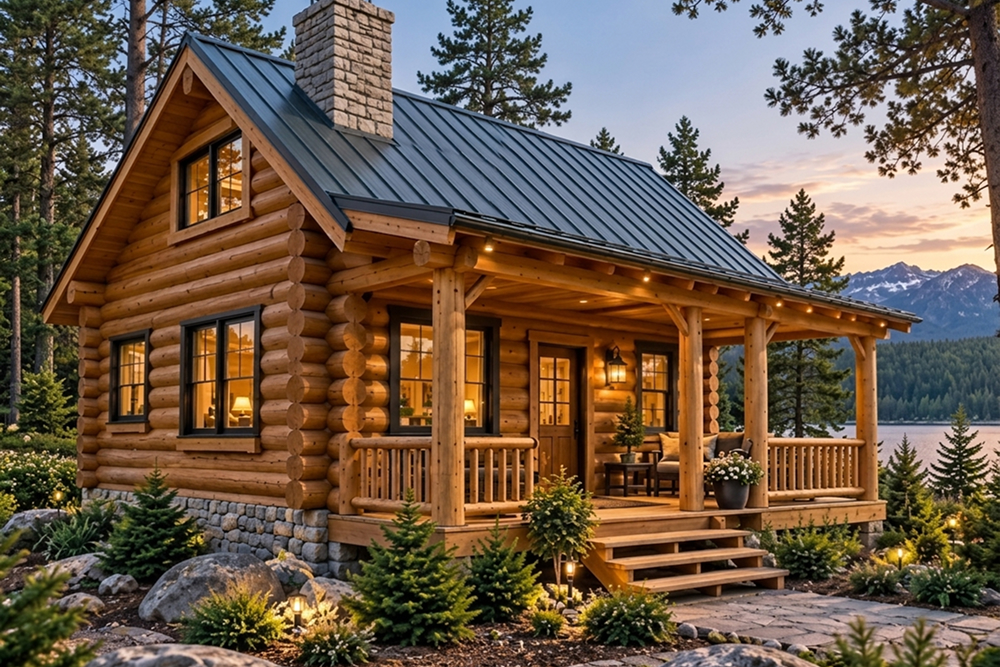
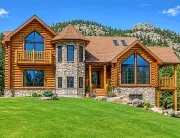
Thousands of log siding homes are built each year in a variety of styles and with several different wood species. Two of them are red northern pine and southern cypress woods. Comparing pine and cypress for log siding comes down to cost, decay resistance, and climate suitability. Both give a classic rustic look, and you should carefully consider their qualities before making a decision.
Description Of Red Pine Wood
Red pine (Pinus resinosa), also called Norway pine, is a tall, straight evergreen conifer native to northeastern North America and southern Canada. Its key characteristics include:
- Size: Typically grows 50 to 125 feet tall with a straight trunk measuring 1.5 to 3 feet in diameter.
- Color: The heartwood ranges from light brown to reddish-brown (or pale very light red-orange-brown), while the sapwood is a creamy light yellow, yellowish-white, or nearly white color
- Bark: Features a distinct orange-red color when young, aging into reddish-brown, scaly plates separated by shallow vertical cracks.
- Stability: Once seasoned and dried, it is a stable wood product.
- Needles: Dark to yellow-green, 4 to 6 inches long, flexible, and always bundled in pairs (fascicles of two) that snap crisply when bent.
- Cones: Ovoid seed cones about 1.5 to 2.5 inches long that mature over a two-year cycle and lack sharp prickles on the scales.
- Growth Habit: Self-prunes its lower branches as it matures, leaving a clean, straight trunk topped by an oval or rounded crown, perfect for log siding and flooring.
Why Is It Called “Norway” Pine?
Despite the name, the red pine is not native to Norway. The nickname likely originated because early New England settlers mistook the trees for Norway spruce, or because the species grew in abundance near the town of Norway, Maine. Its habitat and uses are:
- Environment: Thrives in full sun and well-draining, sandy or rocky soils with cool summers and cold winters. It is the official state tree of Minnesota.
- Economic Uses: Valued for knotty pine paneling, log siding, flooring, cabinetry, structural timber, pulpwood, utility poles, pilings, railroad ties, cabin logs, and windbreaks.
Description of Cypress Wood
Cypress wood is a lightweight, durable softwood (Taxodium distichum) native to the southeastern United States. Even though it is a conifer, it is deciduous and drops its needles in the autumn. Its key characteristics include:
- Size: Typically grows 50 to 120 feet with a straight trunk measuring 3 to 8 feet in diameter.
- Color: The heartwood ranges from light yellowish-brown to dark reddish-brown, while the sapwood is nearly white.
- Bark: The bark of the American bald cypress is thin, fibrous, and stringy, featuring a reddish-brown, cinnamon, or grayish-brown color.
- Grain & Texture: Features a straight grain with a medium-to-coarse texture and a greasy or oily feel when raw.
- Natural Rot Resistance: Contains a natural preservative oil called cypressine that resists decay, moisture damage, and insects.
- Stability: Resists warping, twisting, shrinking, and splitting.
- Growth Habit: The American bald cypress has a distinct growth habit characterized by a straight trunk, a pyramidal or conical shape when young, and an irregular, flat-topped crown as it ages. Most of it grows in wet and swampy areas.
Common Uses
- Exterior: Siding, decking, outdoor furniture, boatbuilding, docks, pergolas, and porch ceilings.
- Interior: Cabinets, millwork, accent walls, exposed beams, and flooring.
“Thousands of log siding homes are built each year in a variety of styles and with several different wood species.”
Benefits Of Pine Log Siding
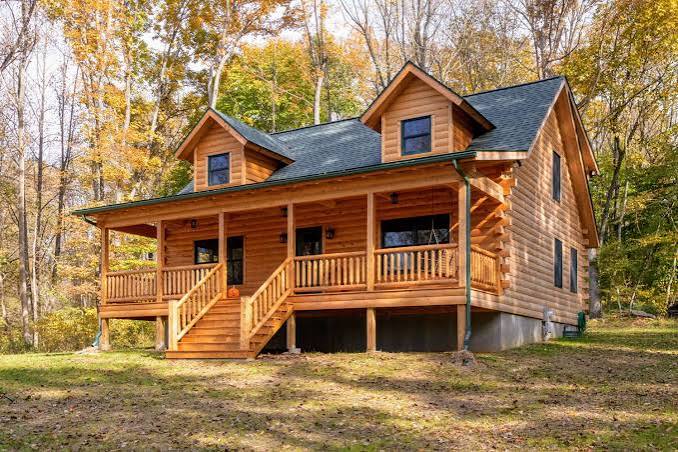 Red pine log siding has some advantages over cypress log siding you should consider, primarily cost and availability. Compare these to cypress wood siding:
- Cost: More affordable and budget-friendly; generally costs significantly less than cypress wood siding.
- Availability: Plentiful year-round from tree farms and managed forests.
- Durability & Rot Resistance: Lower natural resistance to decay and insects than cypress, which is overcome with correct staining and sealing.
- Climate Suitability: Suitable for all climates when properly stained and sealed.
- Grain & Aesthetics: It is highly valued for its prominent, bold grain patterns and a warm, rustic aesthetic. When used as exterior wood siding, it provides a distinctive, strong appearance compared to subtler softwoods.
- Maintenance: Requires staining, sealing, every four to six years to prevent decay, especially in humid regions. In some cases, insect repellent is necessary.
- Installation: Fast and easy to install, often featuring a tongue-and-groove, end-matched design that attaches directly to standard wall framing with minimal waste.
Pros And Cons Of Cypress Log Siding
 Cost: Generally more expensive, about twice the price of pine, which limits its use for log and other style homes.
- Availability: Available through specialty lumber yards, though availability varies by region, grade, and mill lead times (typically 2 to 3 weeks or more). Cypress is a low sustainable tree product.
- Durability & Rot Resistance: Exceptionally durable (“swamp wood”) with natural preservatives that provide high resistance to moisture, decay, and insect damage.
- Climate Suitability: Performs very well in damp, wet, and humid Southern climates.
- Grain & Aesthetics: Slow-growing with tight, distinct grain patterns that age gracefully to a silver-gray patina.
- Maintenance: Still requires periodic re-staining and sealing every four to six years, though it handles wet conditions better than untreated pine.
In Conclusion
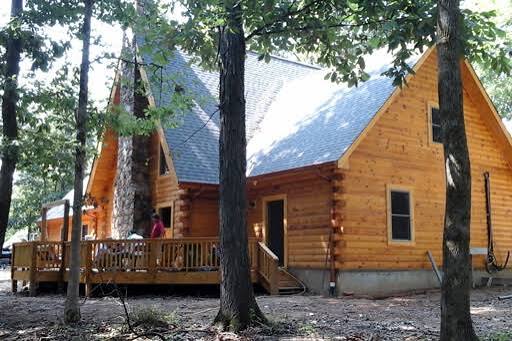
Although red pine and bald cypress wood are used for log siding, red pine has the advantages of significantly less cost and year-round availability. This also results in less costly mortgages and generally starting construction sooner. We have log siding, corner systems, log trim, fasteners, stain, and pine flooring for creating the perfect log homes at The WoodWorkers Shoppe.

Recent Comments