Thinking about a project, such as installing wall or ceiling material, made with knotty pine paneling? Selecting the best knotty pine paneling requires balancing thickness, width, joint style, finish prep, availability, cost, and warranty to ensure durability and minimize waste. Not every dealer has the best quality paneling or prices. Before you search for and buy yours, review these tips that follow to select the best knotty pine paneling.
Why Knotty Pine Paneling Is A Favorite
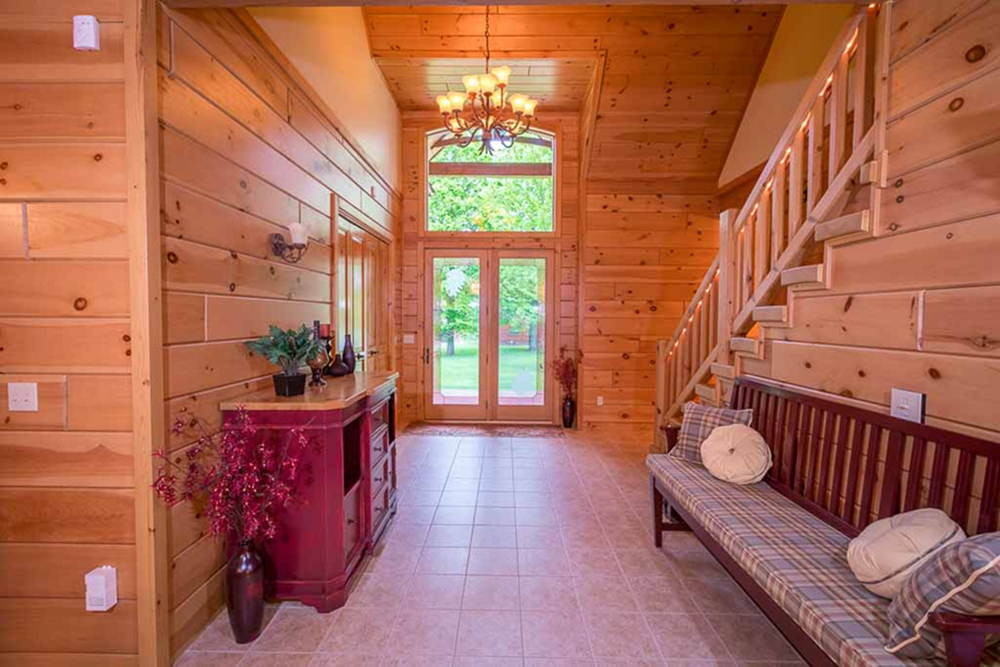
Knotty pine paneling is a favorite choice for walls and ceilings because it brings natural warmth, beauty, rustic charm, and affordability to home interiors. Select paneling with these key pros:
Natural Aesthetic and Warmth
- Distinct character: Prominent dark knots, unique grain patterns, and mineral streaks give the wood a cozy, lived-in feel.
- Timeless appeal: It fits seamlessly into traditional log cabins, mid-century modern spaces, and modern rustic home designs.
- Ages gracefully: Unlike man-made alternatives that can fade or discolor, real pinewood ages beautifully and develops a deeper character over time.
Cost-Effectiveness and Sustainability
- Affordable price: Knotty pine is significantly cheaper than scarce hardwoods and exotic wood options.
- Eco-friendly: Pine trees grow rapidly on managed tree farms across North America, making the supply highly sustainable and renewable.
Easy Installation
- Tongue-and-groove design: Modern boards feature interlocking sides that hide nail heads and create a clean, professional look.
- End-matching technology: Many quality panels feature end-matched grooves so boards do not have to be cut to land directly on a wall stud, reducing material waste by up to 20% and saving installation labor.
- Pre-finished options: Factory-finished boards eliminate the mess, odor, and drying time of painting or staining onsite, allowing for immediate installation.
Knotty Pine Paneling: Key Selection Criteria
For quality, purchase hand-inspected paneling from a supplier that carries a solid warranty and a return policy. Get the best joint design, such as tongue-and-groove (T&G) with end-matching. End-matched boards lock on the ends as well as the sides, allowing you to butt joints anywhere between wall studs to reduce measuring and sawing time and material waste by up to 20%. Ensure the wood is kiln-dried to stabilize the moisture content, preventing future shrinkage, warping, or stain resistance issues.
Choose between raw unfinished and pre-finished knotty pine paneling. Unfinished is less expensive and allows custom staining, while pre-finished saves installation time but costs more upfront. If you want to stain or clear coat the paneling yourself or hire a painter, go with unfinished. If you want a true professional finish and save time, go with pre-finished paneling.
“Selecting the best knotty pine paneling requires balancing thickness, width, joint style, finish prep, availability, cost, and warranty to ensure durability and minimize waste.”
Recommended Dimensions And Styles
Tongue and groove, end-matched knotty pine paneling is available in several widths to meet your preferences. Here is more information to help you decide which is best for your needs.
- Widths: Standard individual boards come in 4”, 5”, 6”, and 8” widths. Narrower boards offer tight vertical texture, while wider boards provide a bolder rustic look.
- 6-Inch (1×6): The most popular and versatile width for both walls and ceilings, offering a balanced look that is neither too busy nor too wide.
- 4-Inch (1×4) & 5-Inch (1×5): Frequently used for tighter spaces, wainscoting, or traditional beadboard-style looks.
- 8-Inch (1×8): Preferred for larger rooms or dramatic vertical installations to cover large expanses quickly with fewer seams.
- Choose ¾” thick boards: This provides optimal strength and dent resistance, unlike flimsy thin sheets.
- Lengths: Orders are filled with random length boards.
- Not Flooring: Knotty pine paneling is not flooring material. It is similar, but has a different shape. It is typically available from the same supplier.
Trims And Moldings To Match Paneling
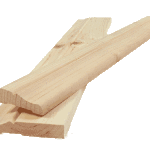 Once you select the paneling for your projects, choose the trims, moldings, and baseboard materials in knotty pine to complement it.
Casing For Doors And Windows – 95” Long & 3/4” Thick
 Colonial Casing is 2 ¼” wide with an attractive profile (shown)
- Round Over Casing is 2 ¾” wide with the top and bottom rounded
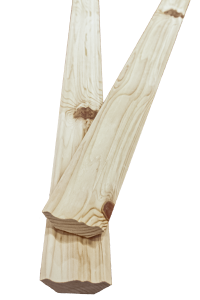
Ceiling Knotty Pine Paneling Trims
- Beveled-Edge has one beveled edge for a clean look
- Crown Molding (pictured here) sets at a 45° angle to the wall
All three trims are ¾” thick and 95” long to provide strength and convenience in installation. You can stain these ceiling trims to match your walls or stain them with a different color to add contrast and excitement to the walls.
Baseboards For Good Looks and Protection
As you know, baseboards are installed at the bottom or base of walls where they touch the floors. Our baseboards are typically ¾” thick, 2 ¼” to 4 ½” wide, and 95” long in exciting styles. Learn how to install them like a pro.
For The Best Results, Purchase High-Quality Materials.
Small Knotty Pine Trims
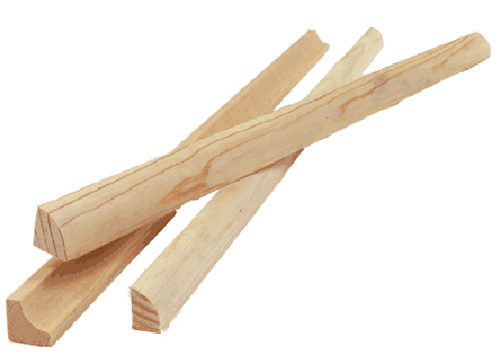 Quarter Round is a convex trim that is shaped like a quarter circle. It is one of the most common trim types used where floors meet baseboards.
Cove Trim is typically used in corners where walls meet ceilings. It can also be used on cabinets, shelves, mantles, and other applications. A concave profile gives cove trim its distinctive shape.
Base Shoe, also known as shoe molding, is a thin strip of wood that runs along the bottom of baseboards. It has a 90- degree angle on the backside, and the front of the shoe is slightly rounded over. All three styles are available in 95” lengths for your convenience.
These ideas should help you select the knotty pine paneling and trims for your projects. See all that we have to offer at The WoodWorkers Shoppe.com.


Recent Comments