
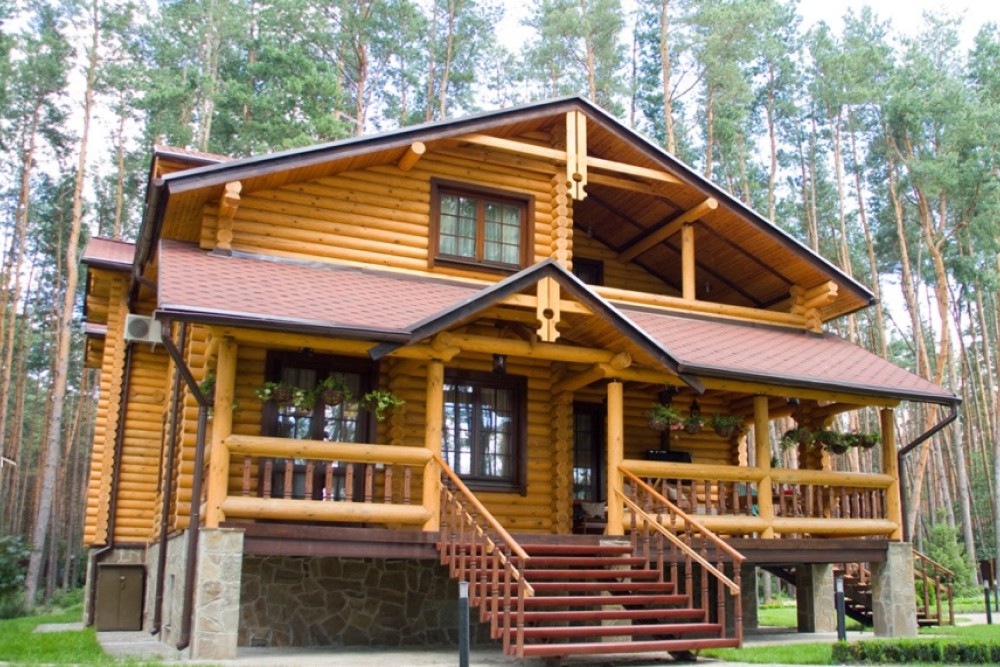
Knotty Pine and Cedar are both excellent choices for log siding, but they cater to different priorities. Knotty Pine is highly affordable and offers a rustic charm, making it a great budget-friendly pick. Cedar, while a larger initial investment, is superior in natural moisture and pest resistance, making it much more durable with lower maintenance over time
Knotty Pine And Cedar Log Siding Comparison
Knotty pine log siding and white cedar log siding are both excellent building materials for constructing log homes, cabins, and business buildings. You can see their key differences at a glance in the chart below for a quick reference:
| Feature | Knotty Pine Log Siding | Cedar Log Siding |
|---|---|---|
| Initial Cost | Highly affordable and budget -friendly | Premium priced; costs more than pine |
| Durability | Durable soft wood | Naturally tough against dings and weathering |
| Maintenance | Requires staining and sealing every 4-6 years to prevent rot | Requires less staining/sealing, more insect and moisture resistance |
| Aesthetics | Varied colors, visible dark knots | Lighter colors, visible dark knots |
| Availability | Available year-round | Varies from year to year |
| Sustainability | Trees are planted on tree farms each year | Some replanting but very little |
| Lifespan | Generations, dependent upon maintenance | Lasts longer than pine. |
Cost And Upfront Investment
Pine: If you are looking to get the rustic log-cabin aesthetic without blowing your budget, pine is the clear winner. It is readily available, much cheaper to produce, and carries a smaller initial investment.
Cedar: Cedar is considered a premium building material. You will pay a noticeably higher upfront price, but many builders consider it a better long-term investment because you save money on repairs and stain applications down the road.
Both wood species are sold by the square foot from online and local suppliers. It is more cost-effective to purchase by the square foot than by the board foot at local suppliers.
“Knotty Pine and Cedar are both excellent choices for log siding.”
Maintenance And Weather Resistance
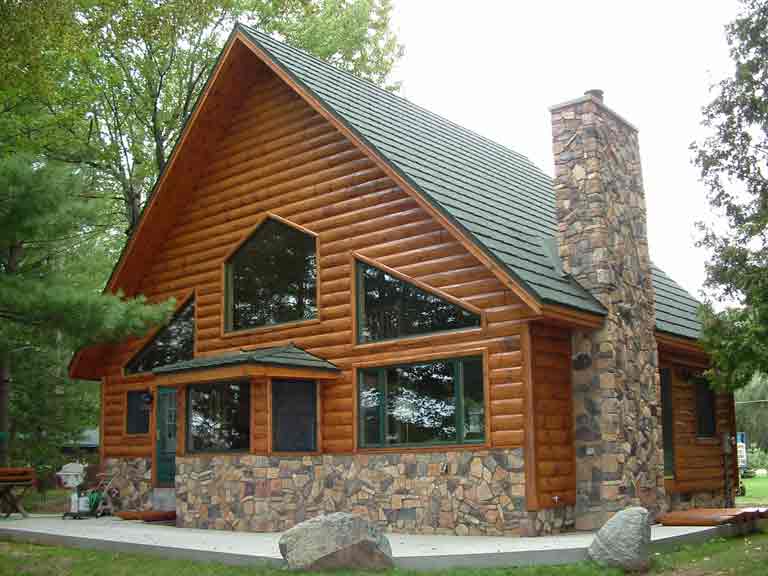
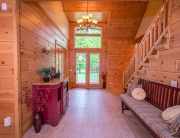
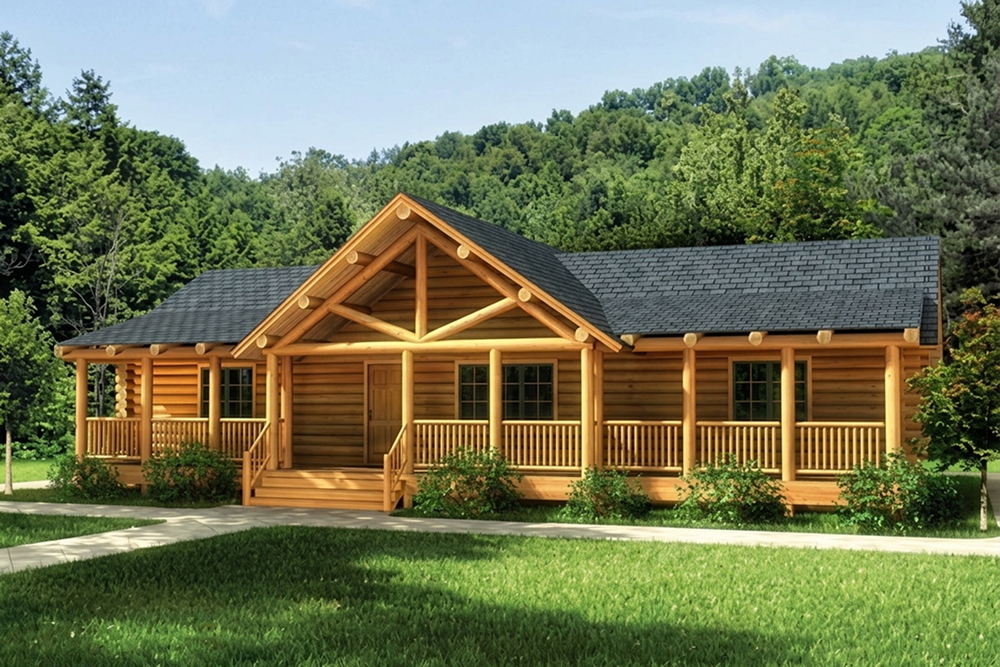
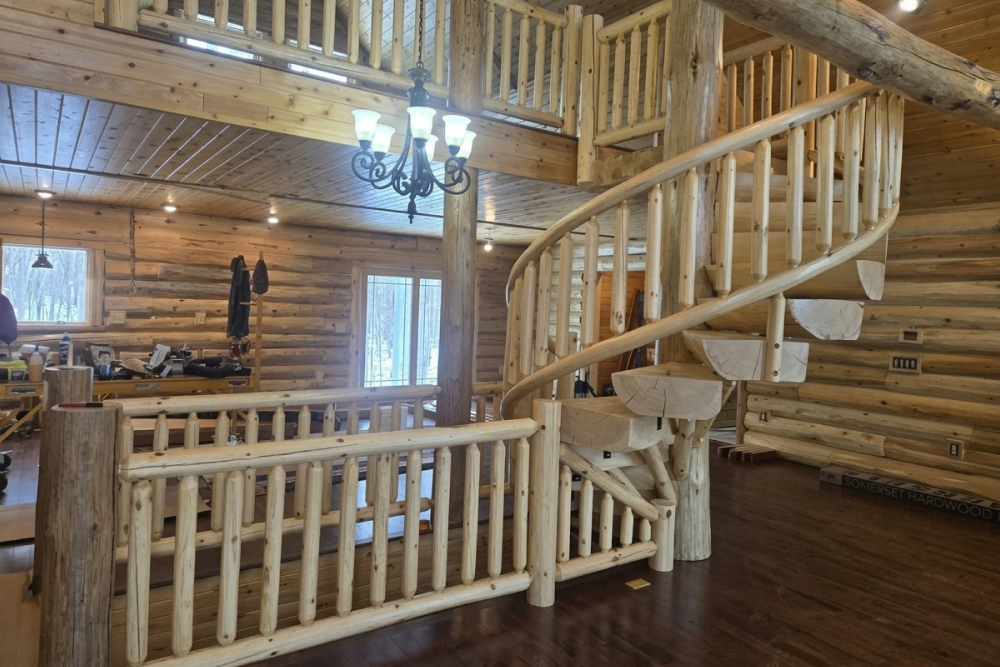
Pine Log Siding Home
 Your climate can have a bearing on the choice between pine and cedar siding. Heat versus cold and dry versus wet climates can affect both wood species differently. Their maintenance and weather resistance should be taken into consideration with the following descriptions:
- Pine: Pine is a durable softwood that acts like a sponge without proper protection. It is susceptible to rot, moisture damage, and wood-boring insects if it isn’t routinely sealed and stained. You can overcome these common issues with proper staining and sealing.
- Cedar: Cedar contains natural resins and oils that are inherently toxic to insects and highly resistant to decay and moisture. It is dimensionally stable and holds up much better against harsh temperature extremes and damp climates.
Pine And Cedar Log Siding Aesthetics
Aesthetics are important to anyone making a choice between pine and cedar log siding. These descriptions can help you choose the right product for your home or business needs:
- Pine: Knotty pine is beloved for its classic, warm cabin look. It features a gorgeous overall hue contrasted by dark, distinct knots, providing that traditional rustic warmth. It can contain natural mineral streaks to add to its charm.
- Cedar: Cedar offers a slightly more sophisticated rustic aesthetic. It also has a rich array of light natural color variations and smoother grain patterns, with fewer prominent knots than typical pine.
Availability Of Wood Log Siding
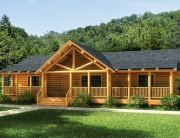
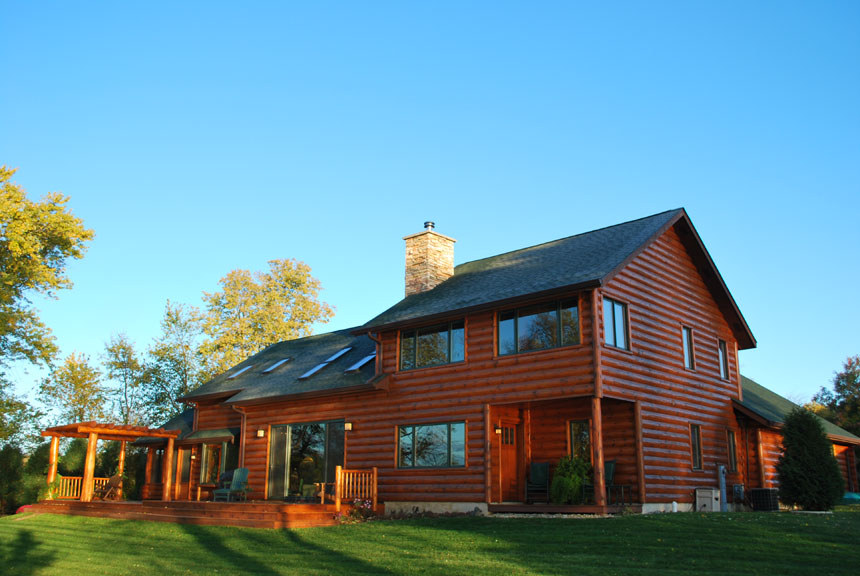 Cedar Log Siding Home illustrated here
Knotty pine log siding is readily available year-round because it is harvested from both wild timber tracts and tree farms. This is a major plus for pine siding because orders can typically be filled and shipped within a few days. Replanting seedlings on tree farms provides replenishment for future generations.
White cedar log siding is typically not available year-round because of where it is harvested. It is gathered from wild tracts of timber in swampy areas – not from tree farms. The wet areas must freeze over in the winter to allow loggers to access the cedar trees. You must contact a supplier to determine if and when cedar siding will be available this year.
Are You Ready To Order Log Siding?
If you are ready to purchase log siding for a home, cabin, or business building, you have several options. The best results are obtained by using tongue and groove siding with the end-matching design. This product installs faster, easier, and is virtually a “no-waste” product. Consider these sources for your purchase:
- Online: Best quality for the price is found at WoodWorkersShoppe.com.
- The WoodWorkers’ Shoppe Store: Best quality for the price at a walk-in store is found here.
- Lumber Yards: Generally, has a limited supply of lower-quality siding.
- Local DIY Suppliers: You may find enough siding, but typically lacks consistent quality.
- Local Sawmills: Typically, cannot supply tongue and groove, end-matching siding.
Use all these ideas in making your decision of knotty pine versus knotty cedar log siding. Real wood is magic-looking compared to synthetic or fake materials. Don’t forget to order log corners, trims, stain, and caulking. Happy building, and let us hear from you soon!

Recent Comments