
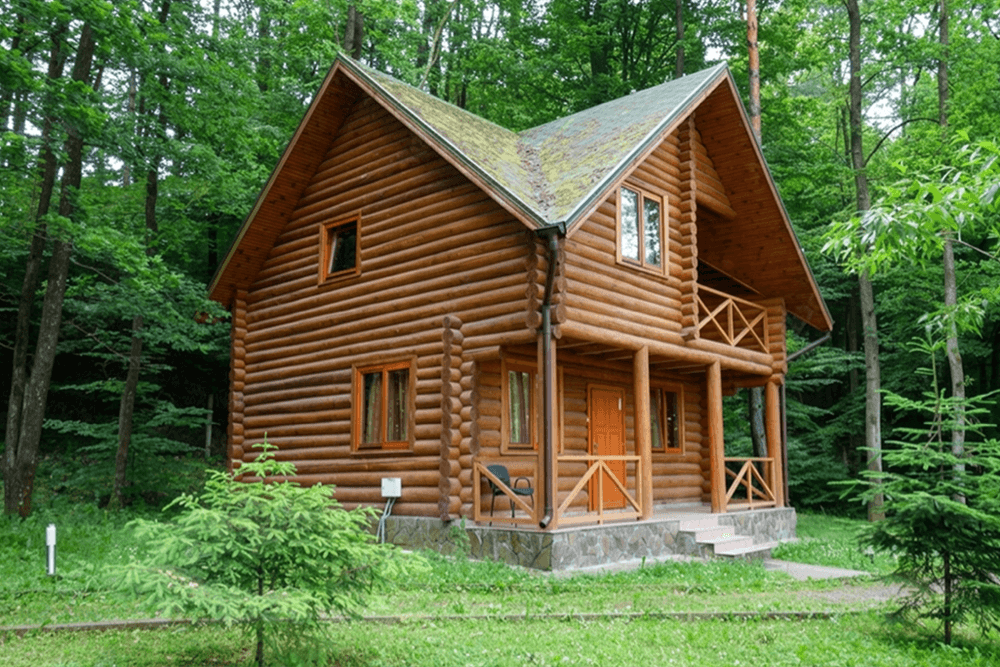
No, we will not run out of pine trees to build log homes. Thanks to sustainable forestry programs, intentional tree farming, and strict reforestation regulations, the supply of pine is highly renewable. Across North America, more wood is grown in forests every year than is harvested, ensuring a steady supply for future generations. Natural forests of Red Pine (Norway Pine) also produce thousands of pine trees each year in the US. More homes can be built with pine log siding than with full logs since two pieces of siding can but cut from each log.
Why the Supply Of Pine Trees Is Sustainable
Although many people are concerned about the loss of pine forests, there’s no need to worry about it. Here is the good news:
- Growth Exceeds Harvest: Industry leaders like Weyerhaeuser and independent forest managers plant millions of seedlings every day. In the United States, there are actually more trees today than there were 70 years ago.
- Managed Tree Farms: Pine is one of the fastest-growing softwood species. It is widely cultivated on regulated tree farms specifically designated for building materials, which relieves pressure on natural, old-growth forests.
- Dead Timber Utilization: Many builders also harvest standing dead timber (such as trees affected by natural wildfires or beetle-kill), which helps clean up forests while reducing the need to cut down live trees.
- Production: America’s forests currently produce more than 80 million cubic meters of sawn timber a year, making them the largest producers in the world. About 10 per cent of this timber is exported overseas.
- Forest Management: Modern forest management ensures not only that felled trees are replaced, but that every year more wood is grown in US forests than is harvested. 1.6 billion seedlings are planted in the US every year, the equivalent of 4.4 million trees every single day of the year.
Popular Pine Species for Log Homes
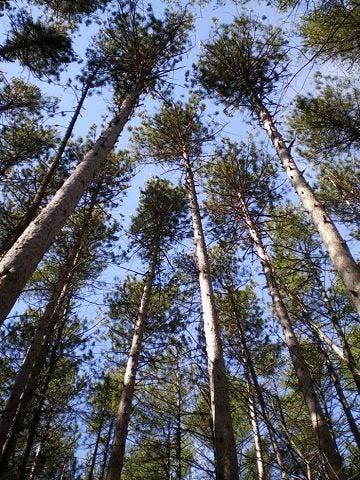
Builders prefer certain pine varieties for their structural integrity, insulation, straightness, and affordability. Red Pine (Norway Pine) and Eastern White Pine are known for being highly workable, lightweight, and offering excellent insulation properties. Lodgepole Pine is also a favorite for log home shells because of its tall, exceptionally straight trunks and slow, even taper. Ponderosa and Yellow Pine are strong, rigid, and widely available in larger diameters and lengths across the Western and Southern U.S.
“No, we will not run out of pine trees to build log homes. More homes can be built with pine log siding than will full logs.”
Why Building With Pine Trees Is Better Than With Hardwoods
Red Pine Trees
 Building a log home with hardwood trees (such as oak, cypress, walnut, or maple) is much more expensive and presents significant structural and physical challenges compared to using traditional softwoods like pine. While hardwoods offer beautiful aesthetics and unmatched durability once cured, they are rarely used due to the following primary hurdles:
Extreme Weight and Physical Labor
- High Density: Hardwoods are much denser and heavier than softwoods, making them incredibly difficult to move, lift, and position.
- Equipment Needs: You will need heavy-duty cranes and lifting equipment, as manual handling is nearly impossible for full-sized hardwood logs.
- Physical Strain: Cutting, hauling, and stacking these trees demand significantly more physical labor and muscle power.
Difficult Workability
- Tool Wear: The high density of seasoned hardwood rapidly dulls chainsaws, chisels, adzes, and auger bits, requiring constant sharpening or replacement.
- Hard Cutting: Notching, coping, and drilling through hardwood logs takes substantially more time and effort than working with pliable softwoods.
- Pre-drilling Requirements: You cannot easily drive large log spikes or screws into hardwood without pre-drilling deep pilot holes to prevent snapping the fasteners.
- Log Problems: Severe checking, twisting, and warping occur in some hardwood species.
- Uneven Drying: Hardwoods have a high moisture content and complex grain structures. As they dry, they lose water at uneven rates.
- Deep Checking: This uneven drying causes severe “checking” (large, deep cracks splitting along the grain).
- Structural Twisting: Hardwood logs are highly prone to twisting, bowing, and warping as they season. This can tear apart tight joinery, create large gaps, and throw wall alignments completely out of square.
- Extreme Settling and Shrinkage: This is another issue with hardwood logs and timbers.
- Massive Diameter Loss: Green hardwoods shrink significantly in diameter (often 5% to 10%) as they dry.
- Wall Compression: A standard wall can lose several inches of height over a 5-to-7-year seasoning period.
- Complex Engineering: You must build specialized slip-joints, adjustable screw jacks under vertical posts, and massive settling gaps above all doors and windows to prevent the shrinking logs from crushing the frames.
- Inconsistent Shapes: Hardwood trees rarely grow as perfectly straight or uniformly cylindrical as coniferous softwoods (like red pine).
- High Taper: Hardwoods typically feature a heavy taper—meaning the base of the tree is drastically wider than the top.
- Fitting Challenges: Fitting highly irregular, tapered logs together requires expert, time-consuming hand-scribing to eliminate massive air gaps between the courses.
In Summary
There are plenty of pine trees available now and will be in the future with well-managed forestry practices. Research shows that the most cost-effective way to build log homes and cabins is with pine log siding. Its construction is superior to other log products, and your home can be built faster and easier because the siding is secured to conventional wall framing. America’s number one log home building supplier has high-quality siding, trims, corners, stains, and caulking for a professional job.

Recent Comments