

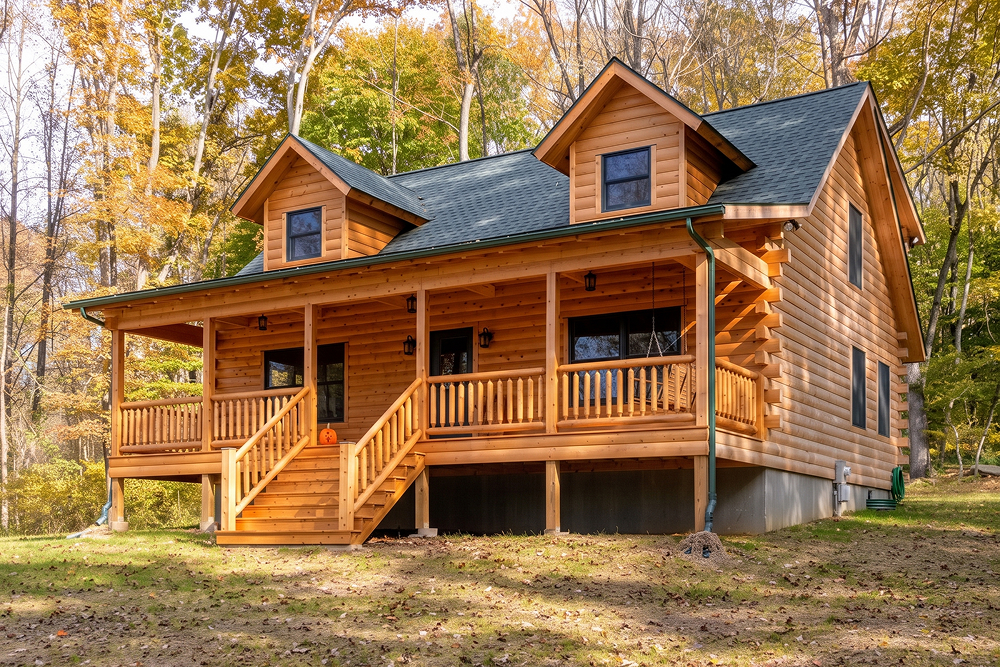
Thinking of building a log house or log cabin? Pine log siding is gaining popularity due to its attractive, rustic aesthetic at a lower cost than full log homes, durability, sustainability, and ease of installation. It provides the classic log cabin look without the high price and complexity of full log construction. Its tongue-and-groove design creates a nearly “no-waste” product that is easy for both homeowners and contractors to work with.
Pine Log Siding: Aesthetic And Lifestyle
Pine log siding is a favorite building material for log homes and cabins. Its aesthetic and lifestyle provide benefits over full log and timber frame homes you can appreciate, including:
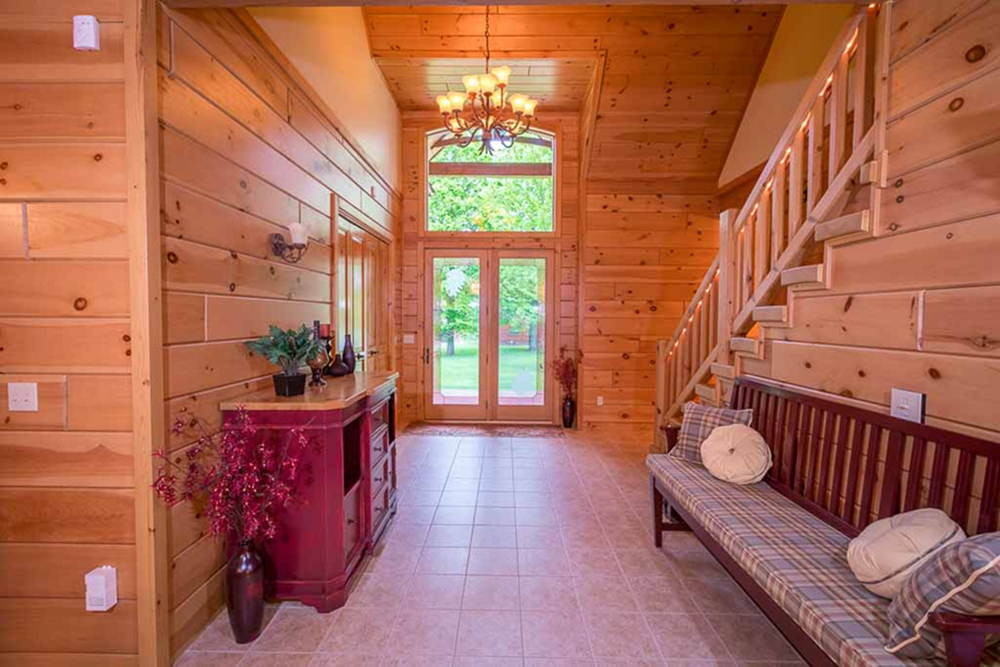
- Rustic appeal: Pine’s natural grain, knots, and color variations create a warm, rustic look that appeals to both traditional and modern rustic home designs.
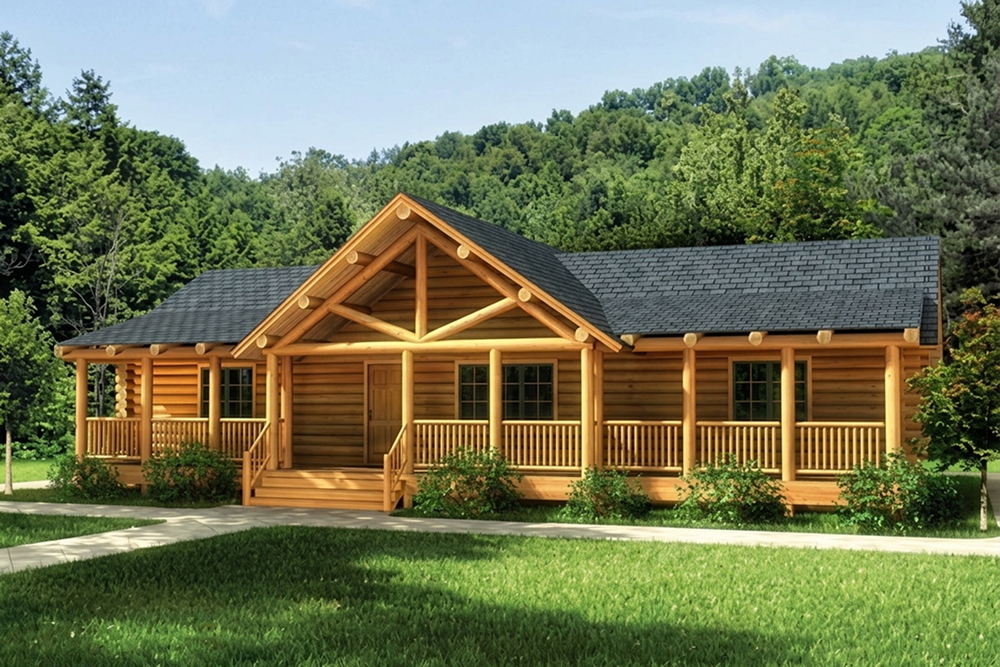
- Full log look: It offers the aesthetic of a full log home without the significant cost and complexity of using full logs. Several log profiles are available to meet your budget.
- Trend for remote work: The trend of people moving to rural areas for a simpler lifestyle has increased demand for log-style homes and siding.
- Relaxing atmosphere: Log home owners report a more relaxed and healthier life in their homes. They experience cleaner air and fewer volatile organic compounds in the building materials.
- Lifestyle: Living in a log home is like being on vacation every day.
Cost And Sustainability Of Pine Log Siding
Pine is a more affordable wood species compared to alternatives, such as oak, cypress, or cedar, making it a cost-effective option for achieving a log home look. Pine trees are a highly- renewable resource that are frequently replanted, making pine log siding a more environmentally friendly choice. Most hardwood trees are not replanted and are becoming scarce, which drives their prices up.
The tongue-and-groove and end-matching design allows for end-butting boards anywhere between studs, resulting in little material waste during installation and faster construction. When interior walls are built with drywall, some of it ends up in landfills, which is avoided with log siding.
“Pine log siding is gaining popularity due to its attractive, rustic aesthetic at a lower cost than full log homes, its durability, sustainability, and ease of installation.”
Installation And Maintenance Benefits
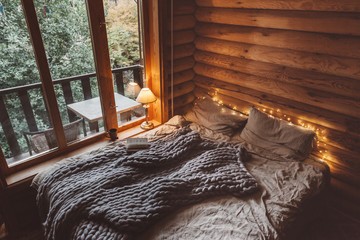 Real Pinewood log siding is a hands-down winner compared to full logs in terms of installation and long-term maintenance. These two benefits make log siding homes more attractive and faster to build.
- Easy to install: Pine is lightweight and easier to saw, sand, and drill than many other woods, making it simpler to install.
- Less labor-intensive: It attaches to conventional wall framing, which is less labor-intensive and quicker than building with full logs.
- Versatile finishes: It holds stains and finishes well, allowing for a variety of colors and protections.
- Less long-term maintenance: Pine log siding does not settle, and joints do not pull apart like full logs can.
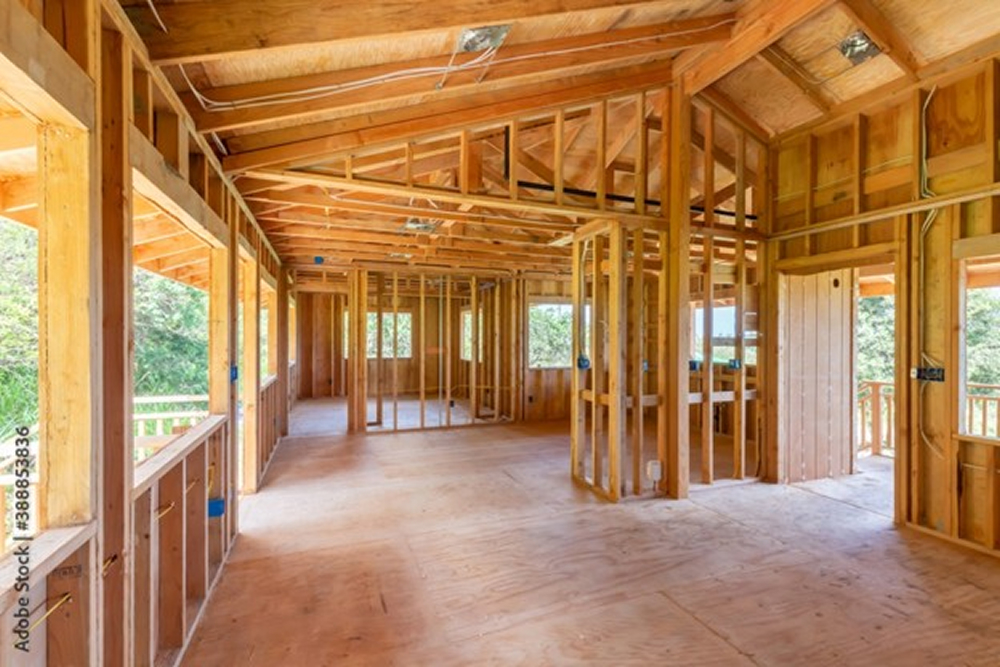
- Easier to add a room: It’s easier to create a room addition with pine log siding than with pine full logs. Simply pour the foundation, frame it up, add the roof, add the siding, and finish the job.
Factors That Affect The Cost Of A Log Siding Home Or Cabin
The cost of building a log siding house is affected by the home’s size and design complexity, location, land characteristics, type and quality of materials and finishes, and labor costs. Other influences include economic conditions, permits and fees, and potential construction delays.
Size and Design
- Size: Larger homes require more materials and labor, leading to higher costs.
- Complexity: Intricate designs, more complex shapes, and a larger number of stories increase costs per square foot.
Materials and Finishes
- Materials: The cost of materials varies widely based on quality and type. Choosing high-end materials for roofing, flooring, siding, or other materials will significantly increase costs over basic materials. Sustainable features: Energy-efficient windows, advanced insulation, and solar panels increase initial costs but can offer long-term savings.
Labor and Economic Factors
- Labor: The cost of skilled labor, such as electricians and plumbers, varies by location and demand. Shortages in skilled labor and building materials can also increase costs.
- Economic factors: Inflation, interest rates, and market demand can impact the price of materials, labor, and financing.
Permits and Other Costs
- Permits and fees: Costs for permits, inspections, and other approvals are required by local authorities and vary by location.
- Construction delays: Unexpected delays can lead to increased costs due to extended labor, equipment rentals, and financing charges.
Pine log siding homes and cabins are growing in popularity because they are beautiful, economically feasible, durable, and sustainable in any climate. Contact The WoodWorkers Shoppe for high-quality pine log siding, corner systems, trims, flooring, paneling, and staining products at fair prices.

Recent Comments